Switching Pet Foods Safely & Sensitive Stomachs
Why Cold-Turkey Switches Upset Tummies • Reading the Bag's Transition Chart • Picky Cat Rules

1. How to Coach a Smooth Food Switch Without Upset Tummies

2. Two Ways That Work — Pick What Fits Your Home
1. Follow the Transition Directions on Your New Food's Label
Every manufacturer tests and prints its own transition guidance right on the package:
Find the Transition Box on the Back or Side of the New Bag
Before your old bag runs completely empty, buy your new bag so you have enough of the old food left to blend gradually according to the new bag's directions.
Keep Everything Else Routine — And Go Slower If Needed
Keep the same bowl, same feeding spot, and same mealtimes. If your pet's stool gets a little soft mid-switch, hold at the current mix ratio or step back for a few extra days until firm.
2. Three Extra Rules When Switching a Cat's Food
Cats imprint strongly on the shape, smell, and texture of their current food:
Rule A: Never Starve a Cat Onto a New Food!
Unlike dogs, a cat that refuses to eat at all can quickly develop serious liver complications (hepatic lipidosis). Never 'wait out' a cat that won't eat—offer their familiar food and call your vet if a cat stops eating.
Rule B: Try a Small Bag First (or Ask About Samples)
If you're sure your pet loves the recipe, the big bag is the best value per pound. If you're testing a new food for a picky eater, start with a small bag or single cans—and ask a manager if we have rep samples available!
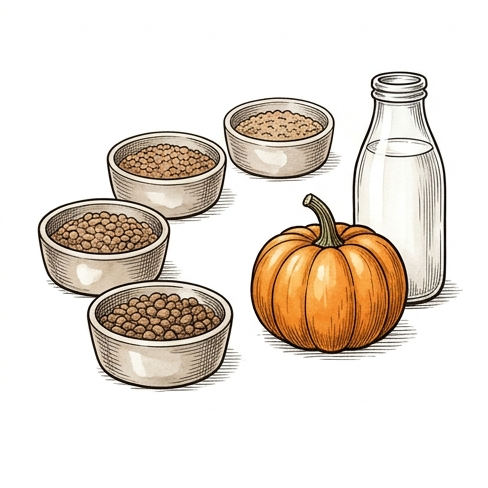
3. Gut-Focused Foods, Pumpkin, Probiotics & Toppers
For healthy pets that need extra digestive support during a transition or rotation:
Gut-Focused Daily Diets (NutriSource Good 4 Life & PureVita)
NutriSource and PureVita build their recipes around the 'Good 4 Life' prebiotic and probiotic system ('nourishes pets from the inside out'), making transitions inside their line especially smooth.
Digestive Toppers: Plain Pumpkin, Goat Milk & Probiotics
We stock digestive probiotics, plain pumpkin pouches/cans, and raw goat's milk in our Dog & Cat Digestive Support sections—always follow the product label's serving directions!
3. Digestive-Friendly Foods & Transition Helpers We Carry
Portion Check & Vet Warning Signs:
A nutrient-dense new food may require a smaller scoop than your old food—check the bag's cup chart!
Buy your next bag while you still have a bottom layer of the current food left to mix
Vomiting, watery diarrhea with blood, lethargy, or refusing all food requires a vet visit
If your pet has IBD, pancreatitis, or a prescription GI diet, always follow your vet's plan

4. Four Keys from Our Pet Nutrition Team
Don't Wait Until the Old Bag Is Empty
Start your transition while you still have about a week's worth of your pet's current food in the bag.
Follow the New Bag's Mixing Guide
Point to the transition chart on the back of your new bag and let your pet's stool quality set the pace.
Re-Measure Your Scoop
Compare kcal/cup on the old bag vs. the new bag so you don't accidentally overfeed a richer recipe.
Special Order Your Usual Brand
If your pet's usual food is temporarily out, we can match the closest protein/life-stage alternative today AND log a zero-deposit special request for your usual bag!

Bring-Home Shopping Checklist
Tap items to check them off on your phone while you shop at Wilsonville Pet Supply.
1. Before You Open the New Bag
2. Optional Transition & Tummy Helpers
3. Freshness & Routine
Complete Reference Notes & Oregon Keeping Guide
How to Coach a Smooth Food Switch Without Upset Tummies
Thirty Seconds of Checking the Transition Box on Your New Bag Saves Your Pet's Stomach (and Your Carpet)!
Temperature & Humidity Zones
| Zone | Target | Notes |
|---|---|---|
| Cold-Turkey Risk | Avoid Sudden Switch | Sudden 100% switch causes loose stool, gas, or bowl refusal |
| Where to Find the Schedule | Follow Label Chart | Check near the feeding guide on your new food's bag or can |
| Sensitive Stomachs | Go Slower If Needed | It's always OK to go slower than the bag's chart if stool softens |
| Picky Cats | Never Starve a Cat! | Take extra time; never let a cat go without eating to force a switch |
| When to Call the Vet | Stop & Call Vet | Vomiting, blood in stool, or a pet that stops eating → Vet visit! |
Two Ways That Work (100% Stocked Store Options)
1. Follow the Transition Directions on Your New Food's Label
Every manufacturer tests and prints its own transition guidance right on the package:
- Find the Transition Box on the Back or Side of the New Bag: Before your old bag runs completely empty, buy your new bag so you have enough of the old food left to blend gradually according to the new bag's directions.
- Keep Everything Else Routine — And Go Slower If Needed: Keep the same bowl, same feeding spot, and same mealtimes. If your pet's stool gets a little soft mid-switch, hold at the current mix ratio or step back for a few extra days until firm.
2. Three Extra Rules When Switching a Cat's Food
Cats imprint strongly on the shape, smell, and texture of their current food:
- Rule A: Never Starve a Cat Onto a New Food!: Unlike dogs, a cat that refuses to eat at all can quickly develop serious liver complications (hepatic lipidosis). Never 'wait out' a cat that won't eat—offer their familiar food and call your vet if a cat stops eating.
- Rule B: Try a Small Bag First (or Ask About Samples): If you're sure your pet loves the recipe, the big bag is the best value per pound. If you're testing a new food for a picky eater, start with a small bag or single cans—and ask a manager if we have rep samples available!
3. Gut-Focused Foods, Pumpkin, Probiotics & Toppers
For healthy pets that need extra digestive support during a transition or rotation:
- Gut-Focused Daily Diets (NutriSource Good 4 Life & PureVita): NutriSource and PureVita build their recipes around the 'Good 4 Life' prebiotic and probiotic system ('nourishes pets from the inside out'), making transitions inside their line especially smooth.
- Digestive Toppers: Plain Pumpkin, Goat Milk & Probiotics: We stock digestive probiotics, plain pumpkin pouches/cans, and raw goat's milk in our Dog & Cat Digestive Support sections—always follow the product label's serving directions!
Digestive-Friendly Foods & Transition Helpers We Carry
Out of Stock on Your Usual Food? Ask Our Crew for the Closest Protein & Life-Stage Match!
- NutriSource & PureVita (Good 4 Life Gut System (Dog & Cat)): Built-in prebiotics and probiotics across both grain-inclusive and grain-free recipes so you can transition or rotate proteins smoothly.
- FirstMate, Fromm & Farmina N&D (Gentle, Digestible Recipes): FirstMate simple single-protein/single-carb formulas, Fromm family-made recipes, and Farmina N&D Pumpkin & Quinoa digestive formulas.
- Digestive Probiotics, Pumpkin & Broths (Dog & Cat Digestive Support Shelf): Canned/pouched plain pumpkin & digestive fiber toppers (like Weruva Pumpkin Patch Up!), fermented raw goat's milk, and daily probiotic powders/chews.
Portion Check & Vet Warning Signs:
- Check Calorie Density: A nutrient-dense new food may require a smaller scoop than your old food—check the bag's cup chart!
- Keep 3–5 Days of Old Food: Buy your next bag while you still have a bottom layer of the current food left to mix
- Red Flags = Call the Vet: Vomiting, watery diarrhea with blood, lethargy, or refusing all food requires a vet visit
- Diagnosed GI Conditions: If your pet has IBD, pancreatitis, or a prescription GI diet, always follow your vet's plan
Keeper Note: Overfeeding Looks Like Loose Stool Too! When switching to a higher-protein or more calorie-dense food (like Orijen, Acana, Farmina, or Nulo), feeding the exact same big scoop you used for a lower-calorie kibble can cause soft stool simply from overeating. Always check the calorie count and feeding chart on the new bag!
Essential Keeper Rules & Pro Tips
- Don't Wait Until the Old Bag Is Empty: Start your transition while you still have about a week's worth of your pet's current food in the bag.
- Follow the New Bag's Mixing Guide: Point to the transition chart on the back of your new bag and let your pet's stool quality set the pace.
- Re-Measure Your Scoop: Compare kcal/cup on the old bag vs. the new bag so you don't accidentally overfeed a richer recipe.
- Special Order Your Usual Brand: If your pet's usual food is temporarily out, we can match the closest protein/life-stage alternative today AND log a zero-deposit special request for your usual bag!
Complete Store Setup Checklist
1. Before You Open the New Bag
- Enough Current Food Left to Mix Gradually (Don't Wait Until Empty!)
- Transition Schedule Located on the Back of the New Bag or Can
- Daily Portion (Cups/Grams) Checked Against the New Bag's Feeding Chart
2. Optional Transition & Tummy Helpers
- Plain Pumpkin Pouch/Can or Digestive Fiber Topper (Follow Label Directions)
- Daily Dog or Cat Probiotic Supplement (Powder, Chew, or Goat Milk)
- Small Trial Bag or Single Cans (For Picky Cats or First-Time Tasters)
3. Freshness & Routine
- 8 oz Measuring Cup (Level Scoops, Not Heaping Coffee Mugs!)
- Bag Clip to Keep Both the Old and New Bags Airtight During the Switch
How We Help With Pet Nutrition at All 6 Oregon Stores
- We Flip the Bag Over Together (AAFCO Rules & the Maker's Own Label): At Wilsonville Pet Supply, Critter Cabana (Newberg), Gresham Pet Supply, Tigard Pet Supply, Salem Pet Supply, and South Salem Pet Supply, we never rely on front-of-bag marketing slogans or make medical promises. Bring a photo of your current food bag and we'll compare the Guaranteed Analysis, the AAFCO nutritional adequacy statement, and the first five ingredients side by side.
- Frequent Buyer Program at Every Register: Just give your phone number at checkout at any of our 6 stores—buy 10 to 12 bags of most dog and cat food brands (Fromm, NutriSource, PureVita, Acana, Orijen, Nulo, Farmina N&D, FirstMate, Zignature, Open Farm, Stella & Chewy's, Primal, Northwest Naturals, and more) and your next bag of the same size is free! Because we track it by phone number in our POS, we can also look up the exact recipe your pet bought last time.
- Zero-Deposit Special Requests & Vet Referral Standard: Don't see the exact bag size or formula your pet eats on our shelf today? Ask at the counter and we'll log a special request in our Command Center with zero deposit. Remember: we carry over-the-counter and vet-formulated diets (not prescription diets), so always see your veterinarian first if your pet has signs of illness (vomiting, blood, not eating, or a cat straining in the litter box), a diagnosed medical condition, or takes medications.
Common Questions (FAQ)
How can I get help with Switching Pet Foods Safely & Sensitive Stomachs at your stores in Oregon?
Stop by any of our 6 family-owned Oregon stores—Wilsonville Pet Supply, Critter Cabana (Newberg), Gresham Pet Supply, Tigard Pet Supply, Salem Pet Supply, or South Salem Pet Supply. Bring a photo of your pet's current food bag and our team will gladly walk the aisle with you and compare labels.
How does your Frequent Buyer Program work on dog and cat food?
Just give your phone number at the register at any of our 6 locations—there are no paper punch cards to keep track of. On most major kibble, raw, freeze-dried, and gently cooked brands, when you buy 10 to 12 bags of the same size, your next bag is free!
Do you sell veterinary prescription diets, or over-the-counter specialty diets?
We do not sell veterinary prescription diets (if your veterinarian has prescribed a therapeutic Rx diet for a diagnosed medical condition, follow your vet's instructions). We stock a deep selection of over-the-counter vet-formulated, limited-ingredient, novel-protein, wholesome-grain, grain-free, wet, freeze-dried, and frozen raw diets.
What if my dog or cat is a picky eater or has a sensitive stomach when switching foods?
Always follow the gradual transition schedule printed on the back of your new food bag—mixing a small amount of the new food into the old food over 7 to 10+ days—and never starve a cat to force a food switch. Ask our crew about single-ingredient toppers, bone broths, plain canned pumpkin, or fermented goat's milk to support a smooth transition.